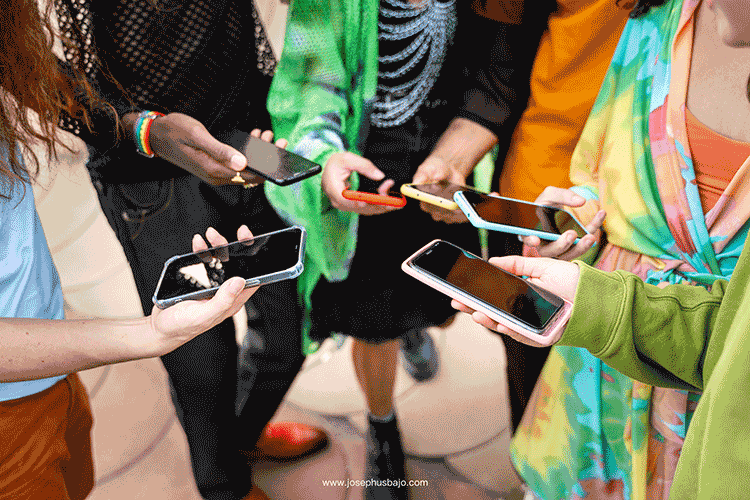
The digital age created an illusion that communication had become borderless. Social media platforms promised unlimited reach, viral scalability, and mass visibility. Businesses, governments, organizations, and political movements invested heavily into digital advertising, algorithmic distribution, and content production under the assumption that reach alone creates influence.
Yet despite unprecedented connectivity, societies today are experiencing a growing crisis of trust, fragmentation, and communication fatigue.
People see more content than ever before, but trust fewer sources. Brands achieve impressions but fail to create familiarity. Political campaigns gain visibility but fail to sustain emotional proximity. Organizations accumulate followers without becoming part of everyday community life.
This emerging contradiction reveals a critical weakness in modern digital communication systems:
𝗩𝗶𝘀𝗶𝗯𝗶𝗹𝗶𝘁𝘆 𝗮𝗹𝗼𝗻𝗲 𝗶𝘀 𝗻𝗼 𝗹𝗼𝗻𝗴𝗲𝗿 𝗲𝗻𝗼𝘂𝗴𝗵.
This is where 𝗛𝘆𝗽𝗲𝗿𝗹𝗼𝗰𝗮𝗹𝗶𝘀𝗺 emerges — not merely as a marketing trend, but as a 𝗺𝗼𝗱𝗲𝗿𝗻 𝗰𝗼𝗺𝗺𝘂𝗻𝗶𝗰𝗮𝘁𝗶𝗼𝗻 𝗱𝗼𝗰𝘁𝗿𝗶𝗻𝗲.
Hyperlocalism proposes that influence is strongest when communication becomes geographically familiar, socially embedded, contextually relevant, and repeatedly experienced within the environments people live in daily.
Rather than treating audiences as abstract masses, Hyperlocalism recognizes communities as living territorial ecosystems where trust is built through repeated localized exposure and social reinforcement.
𝗪𝗵𝗮𝘁 𝗜𝘀 𝗛𝘆𝗽𝗲𝗿𝗹𝗼𝗰𝗮𝗹𝗶𝘀𝗺?
𝗛𝘆𝗽𝗲𝗿𝗹𝗼𝗰𝗮𝗹𝗶𝘀𝗺 is the philosophy and strategic framework of creating influence through localized familiarity, environmental visibility, and proximity-based communication.
It operates on the principle that people are more likely to trust, remember, and support entities they repeatedly encounter within their immediate physical, cultural, and social environments.
Unlike traditional digital communication that prioritizes scale, Hyperlocalism prioritizes:
- 𝗣𝗿𝗼𝘅𝗶𝗺𝗶𝘁𝘆
- 𝗙𝗮𝗺𝗶𝗹𝗶𝗮𝗿𝗶𝘁𝘆
- 𝗥𝗲𝗽𝗲𝘁𝗶𝘁𝗶𝗼𝗻
- 𝗖𝗼𝗻𝘁𝗲𝘅𝘁
- 𝗖𝗼𝗺𝗺𝘂𝗻𝗶𝘁𝘆 𝗜𝗻𝘁𝗲𝗴𝗿𝗮𝘁𝗶𝗼𝗻
- 𝗧𝗲𝗿𝗿𝗶𝘁𝗼𝗿𝗶𝗮𝗹 𝗣𝗿𝗲𝘀𝗲𝗻𝗰𝗲
Under this doctrine, communication is no longer viewed simply as broadcasting information.
Communication becomes the process of embedding presence into the daily consciousness of communities.
𝗧𝗵𝗲 𝗙𝗮𝗶𝗹𝘂𝗿𝗲 𝗼𝗳 𝗠𝗮𝘀𝘀 𝗗𝗶𝗴𝗶𝘁𝗮𝗹 𝗖𝗼𝗺𝗺𝘂𝗻𝗶𝗰𝗮𝘁𝗶𝗼𝗻
Modern communication systems heavily depend on algorithms, virality, and centralized platforms. While these systems are effective for rapid distribution, they often fail to create durable local trust.
A person may see thousands of advertisements online in a single week, yet still choose a familiar neighborhood business over a globally advertised brand.
Why?
Because human decision-making remains deeply territorial and socially contextual.
People trust:
- What their environment repeatedly validates
- What their community discusses
- What feels geographically familiar
- What appears consistently relevant to their immediate lives
Mass digital communication creates temporary attention.
𝗛𝘆𝗽𝗲𝗿𝗹𝗼𝗰𝗮𝗹 𝗰𝗼𝗺𝗺𝘂𝗻𝗶𝗰𝗮𝘁𝗶𝗼𝗻 creates sustained familiarity.
This distinction is critical.
The future of influence may not belong to whoever reaches the most people globally, but to whoever becomes most unavoidable within a specific territory.
𝗧𝗵𝗲 𝗙𝗮𝗺𝗶𝗹𝗶𝗮𝗿𝗶𝘁𝘆 𝗘𝗰𝗼𝗻𝗼𝗺𝘆
Hyperlocalism operates within what can be described as the 𝗙𝗮𝗺𝗶𝗹𝗶𝗮𝗿𝗶𝘁𝘆 𝗘𝗰𝗼𝗻𝗼𝗺𝘆.
In the Familiarity Economy, value is not created purely through product superiority or advertising scale. Instead, value emerges from repeated contextual exposure that gradually transforms recognition into trust.
The communication cycle often follows this progression:
𝗩𝗶𝘀𝗶𝗯𝗶𝗹𝗶𝘁𝘆 → 𝗙𝗮𝗺𝗶𝗹𝗶𝗮𝗿𝗶𝘁𝘆 → 𝗧𝗿𝘂𝘀𝘁 → 𝗣𝗿𝗲𝗳𝗲𝗿𝗲𝗻𝗰𝗲 → 𝗟𝗼𝘆𝗮𝗹𝘁𝘆
This explains why localized communication ecosystems often outperform larger media systems in shaping community behavior.
A local creator consistently seen in neighborhood spaces may develop stronger influence than a national celebrity rarely encountered in everyday life.
A community-based communication network may generate deeper persuasion than expensive nationwide campaigns.
Familiarity compounds over time.
And Hyperlocalism is fundamentally the science of engineering familiarity at territorial scale.
𝗛𝘆𝗽𝗲𝗿𝗹𝗼𝗰𝗮𝗹𝗶𝘀𝗺 𝗮𝗻𝗱 𝘁𝗵𝗲 𝗟𝗮𝘀𝘁 𝗠𝗶𝗹𝗲 𝗼𝗳 𝗗𝗶𝗴𝗶𝘁𝗮𝗹 𝗘𝗰𝗼𝘀𝘆𝘀𝘁𝗲𝗺𝘀
One of the most important concepts behind Hyperlocalism is the idea of the 𝗟𝗮𝘀𝘁 𝗠𝗶𝗹𝗲.
In logistics, the “last mile” refers to the final stage of delivery where products move from distribution systems into the hands of actual consumers.
In communication, the last mile is where information transitions from digital visibility into lived social reality.
Many digital systems fail at this stage.
Content may go viral online while remaining socially irrelevant offline.
Hyperlocalism attempts to solve this by integrating communication into:
- Local communities
- Geographic territories
- Cultural contexts
- Physical environments
- Community-based digital networks
- Real-world interaction systems
Under this doctrine, communication succeeds not when content is merely viewed, but when it becomes socially embedded.
𝗛𝘆𝗽𝗲𝗿𝗹𝗼𝗰𝗮𝗹𝗶𝘀𝗺 𝗮𝘀 𝗮 𝗖𝗼𝗺𝗺𝘂𝗻𝗶𝗰𝗮𝘁𝗶𝗼𝗻 𝗗𝗼𝗰𝘁𝗿𝗶𝗻𝗲
A doctrine is more than a strategy.
A doctrine is a guiding philosophy that shapes how systems operate.
Hyperlocalism qualifies as a modern communication doctrine because it fundamentally changes the assumptions behind influence itself.
Traditional communication assumes:
- Bigger reach creates stronger influence
- Centralized media controls narratives
- Virality determines relevance
- Audience scale is the primary objective
Hyperlocalism proposes a different framework:
- 𝗣𝗿𝗼𝘅𝗶𝗺𝗶𝘁𝘆 creates trust
- 𝗙𝗮𝗺𝗶𝗹𝗶𝗮𝗿𝗶𝘁𝘆 creates influence
- 𝗖𝗼𝗻𝘁𝗲𝘅𝘁 creates relevance
- 𝗧𝗲𝗿𝗿𝗶𝘁𝗼𝗿𝘆 creates persistence
- 𝗖𝗼𝗺𝗺𝘂𝗻𝗶𝘁𝘆 creates legitimacy
This transforms communication from a purely informational process into an environmental system of influence.
Under Hyperlocalism, communication is no longer isolated from geography, culture, or social behavior.
Communication becomes territorial.
𝗧𝗵𝗲 𝗥𝗶𝘀𝗲 𝗼𝗳 𝗛𝘆𝗽𝗲𝗿𝗹𝗼𝗰𝗮𝗹 𝗡𝗲𝘁𝘄𝗼𝗿𝗸𝘀
The future may increasingly favor decentralized communication structures composed of localized nodes rather than centralized mass-media systems.
These hyperlocal networks can include:
- Community creators
- Neighborhood media pages
- Local digital groups
- Territorial communication channels
- Community-based livestream systems
- Hyperlocal information networks
- Barangay-level communication ecosystems
- Geo-contextual digital communities
Such systems create stronger emotional and social integration because communication emerges from within the community rather than being imposed externally.
This changes the psychological reception of information.
Messages feel:
- More authentic
- More relevant
- More familiar
- More trusted
- More socially validated
In many cases, people no longer trust institutions directly.
They trust familiar environments.
𝗛𝘆𝗽𝗲𝗿𝗹𝗼𝗰𝗮𝗹𝗶𝘀𝗺 𝗮𝗻𝗱 𝘁𝗵𝗲 𝗙𝘂𝘁𝘂𝗿𝗲 𝗼𝗳 𝗜𝗻𝗳𝗹𝘂𝗲𝗻𝗰𝗲
Hyperlocalism may become one of the defining communication paradigms of the next decade because it aligns with how human beings naturally process trust and belonging.
As digital saturation increases, people increasingly seek:
- Familiarity over novelty
- Community over mass exposure
- Context over abstraction
- Human relevance over algorithmic noise
Organizations that understand Hyperlocalism may gain strategic advantages in:
- Marketing
- Politics
- Governance
- Advocacy
- Community development
- Media systems
- Public relations
- Crisis communication
- Brand loyalty
- Social mobilization
The future of communication may not belong to those who dominate the internet globally.
It may belong to those who successfully integrate themselves into the everyday realities of specific communities.
𝗖𝗼𝗻𝗰𝗹𝘂𝘀𝗶𝗼𝗻
Hyperlocalism represents more than a communication technique.
It represents a shift in how influence itself is understood.
In an age overwhelmed by information abundance, attention fragmentation, and declining institutional trust, Hyperlocalism offers an alternative doctrine rooted in proximity, familiarity, and territorial relevance.
It recognizes that influence is strongest not when communication is merely broadcast widely, but when it becomes embedded within the lived environments of people.
As digital ecosystems continue evolving, the organizations, movements, and brands that master the last mile of communication may ultimately shape the future of influence itself.
Hyperlocalism is therefore not simply about local marketing.
𝗜𝘁 𝗶𝘀 𝗮 𝗺𝗼𝗱𝗲𝗿𝗻 𝗱𝗼𝗰𝘁𝗿𝗶𝗻𝗲 𝗼𝗳 𝗵𝗼𝘄 𝗵𝘂𝗺𝗮𝗻 𝗮𝘁𝘁𝗲𝗻𝘁𝗶𝗼𝗻, 𝘁𝗿𝘂𝘀𝘁, 𝗮𝗻𝗱 𝗶𝗻𝗳𝗹𝘂𝗲𝗻𝗰𝗲 𝗮𝗿𝗲 𝗯𝘂𝗶𝗹𝘁 𝗶𝗻 𝘁𝗵𝗲 𝗮𝗴𝗲 𝗼𝗳 𝗱𝗶𝗴𝗶𝘁𝗮𝗹 𝗼𝘃𝗲𝗿𝘀𝗮𝘁𝘂𝗿𝗮𝘁𝗶𝗼𝗻.