𝗛𝗼𝘄 𝗣𝗿𝗼𝘅𝗶𝗺𝗶𝘁𝘆, 𝗙𝗮𝗺𝗶𝗹𝗶𝗮𝗿𝗶𝘁𝘆, 𝗮𝗻𝗱 𝗖𝗼𝗺𝗺𝘂𝗻𝗶𝘁𝘆 𝗔𝗿𝗲 𝗥𝗲𝗱𝗲𝗳𝗶𝗻𝗶𝗻𝗴 𝗠𝗼𝗱𝗲𝗿𝗻 𝗜𝗻𝗳𝗹𝘂𝗲𝗻𝗰𝗲
For years, the internet promised a borderless world.
Social media platforms connected billions of people. Brands could advertise globally with a single click. Viral content crossed countries within minutes. Information became faster, cheaper, and more accessible than at any point in human history.
Yet despite this unprecedented connectivity, something unexpected happened.
People began searching for what was closest to them.
Not geographically alone — but emotionally, culturally, socially, and contextually.
Communities started valuing neighborhood relevance over mass visibility. Consumers became more influenced by familiar local personalities than distant celebrities. Residents trusted community groups more than national institutions. Local creators began outperforming highly polished corporate media in engagement and influence.
This phenomenon is known as 𝗛𝘆𝗽𝗲𝗿𝗹𝗼𝗰𝗮𝗹𝗶𝘀𝗺.
And in the digital age, it is rapidly becoming one of the most powerful forces shaping communication, media, politics, business, and human behavior.
𝗪𝗵𝗮𝘁 𝗜𝘀 𝗛𝘆𝗽𝗲𝗿𝗹𝗼𝗰𝗮𝗹𝗶𝘀𝗺?
𝗛𝘆𝗽𝗲𝗿𝗹𝗼𝗰𝗮𝗹𝗶𝘀𝗺 is the prioritization of highly localized relevance in communication, influence, and interaction.
It focuses on specific communities, neighborhoods, barangays, districts, cities, or tightly connected social ecosystems rather than broad generalized audiences.
In practical terms, hyperlocalism means:
- communication tailored to a specific community
- content rooted in local identity and culture
- influence built through proximity and familiarity
- trust established through repeated real-world presence
- digital ecosystems connected to physical communities
Unlike traditional mass communication, hyperlocalism does not aim to speak to everyone.
It aims to become deeply relevant to a specific group of people.
And in today’s fragmented digital environment, relevance has become more powerful than reach.
𝗪𝗵𝘆 𝗛𝘆𝗽𝗲𝗿𝗹𝗼𝗰𝗮𝗹𝗶𝘀𝗺 𝗜𝘀 𝗥𝗶𝘀𝗶𝗻𝗴
𝟭. 𝗣𝗲𝗼𝗽𝗹𝗲 𝗔𝗿𝗲 𝗢𝘃𝗲𝗿𝘄𝗵𝗲𝗹𝗺𝗲𝗱 𝗯𝘆 𝗠𝗮𝘀𝘀 𝗖𝗼𝗻𝘁𝗲𝗻𝘁
Modern users consume thousands of pieces of content every day.
Advertisements, short videos, livestreams, news updates, memes, influencers, podcasts, and AI-generated media now compete for attention simultaneously.
As digital noise increases, attention becomes more selective.
People naturally filter information based on relevance.
The question is no longer:
“Is this content visible?”
The question now is:
“Does this content feel connected to my life?”
Hyperlocal content succeeds because it immediately answers that question.
A video about a local traffic issue, neighborhood event, nearby business, or familiar community personality instantly feels more important than generic global content.
Relevance creates attention.
Familiarity creates trust.
𝟮. 𝗧𝗿𝘂𝘀𝘁 𝗶𝗻 𝗠𝗮𝘀𝘀 𝗜𝗻𝘀𝘁𝗶𝘁𝘂𝘁𝗶𝗼𝗻𝘀 𝗜𝘀 𝗗𝗲𝗰𝗹𝗶𝗻𝗶𝗻𝗴
Across many societies, people have become increasingly skeptical of large institutions, mainstream narratives, and overly polished branding.
Consumers now prefer:
- authentic creators
- community-driven information
- local recommendations
- relatable personalities
- grassroots experiences
This explains why local vloggers, neighborhood Facebook groups, and community-driven pages often outperform professionally produced media in engagement and influence.
People trust people they perceive as “one of us.”
Hyperlocalism leverages this psychological reality.
𝟯. 𝗠𝗼𝗯𝗶𝗹𝗲 𝗧𝗲𝗰𝗵𝗻𝗼𝗹𝗼𝗴𝘆 𝗠𝗮𝗱𝗲 𝗛𝘆𝗽𝗲𝗿𝗹𝗼𝗰𝗮𝗹 𝗖𝗼𝗺𝗺𝘂𝗻𝗶𝗰𝗮𝘁𝗶𝗼𝗻 𝗜𝗻𝘀𝘁𝗮𝗻𝘁
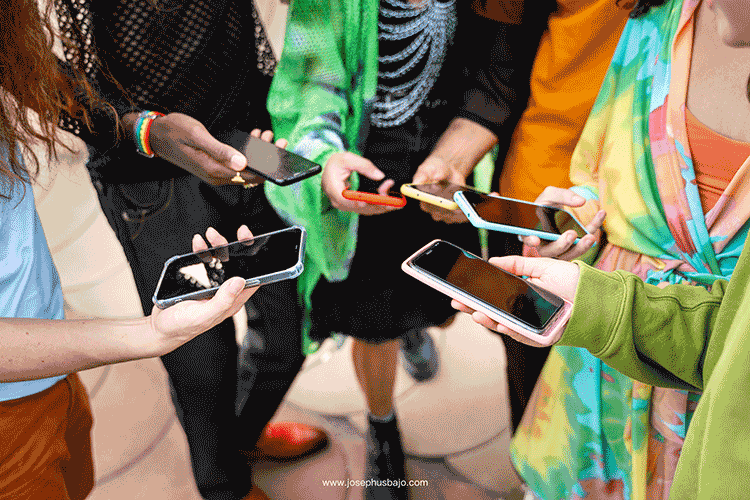
The smartphone fundamentally changed communication.
Before mobile technology, local communication required physical presence, traditional media, or organized community structures.
Today, a single resident can instantly livestream a neighborhood issue, upload localized content, organize community action, or influence thousands of nearby people in real time.
This created a new form of digital proximity.
Even if people are physically apart, mobile platforms allow communities to remain socially connected within localized ecosystems.
The result is the rise of:
- neighborhood-based digital communities
- local creator ecosystems
- community-focused media networks
- barangay-level communication systems
- hyperlocal commerce and marketplaces
- localized digital influence networks
The internet did not eliminate local identity.
It amplified it.
𝗧𝗵𝗲 𝗣𝘀𝘆𝗰𝗵𝗼𝗹𝗼𝗴𝘆 𝗕𝗲𝗵𝗶𝗻𝗱 𝗛𝘆𝗽𝗲𝗿𝗹𝗼𝗰𝗮𝗹𝗶𝘀𝗺
At its core, hyperlocalism is deeply psychological.
Humans naturally prioritize:
- familiarity
- proximity
- tribal belonging
- shared identity
- repeated exposure
- contextual relevance
People are more likely to trust information when:
- they recognize the location
- they know the people involved
- the issue affects their daily life
- the messenger feels socially familiar
This is why hyperlocal communication often produces stronger emotional engagement than broad national messaging.
A resident may ignore a national infrastructure announcement.
But they will immediately react to road construction affecting their own neighborhood.
Hyperlocalism works because it aligns with how humans naturally process relevance.
𝗛𝘆𝗽𝗲𝗿𝗹𝗼𝗰𝗮𝗹𝗶𝘀𝗺 𝗶𝗻 𝗠𝗮𝗿𝗸𝗲𝘁𝗶𝗻𝗴
Traditional digital marketing focused heavily on:
- impressions
- reach
- clicks
- broad audience targeting
- virality
But modern consumers increasingly ignore generic advertising.
This is where hyperlocal marketing becomes powerful.
𝗛𝘆𝗽𝗲𝗿𝗹𝗼𝗰𝗮𝗹 𝗺𝗮𝗿𝗸𝗲𝘁𝗶𝗻𝗴 focuses on becoming culturally and socially embedded within a specific market environment.
Instead of merely showing advertisements, hyperlocal strategies aim to become part of the community itself.
Examples include:
- community-centered storytelling
- local creator collaborations
- neighborhood-focused campaigns
- localized language adaptation
- real-world community integration
- place-based brand familiarity
- recurring visibility within specific territories
This creates a critical advantage:
𝗙𝗮𝗺𝗶𝗹𝗶𝗮𝗿𝗶𝘁𝘆 𝗿𝗲𝗱𝘂𝗰𝗲𝘀 𝗱𝗲𝗰𝗶𝘀𝗶𝗼𝗻 𝗿𝗲𝘀𝗶𝘀𝘁𝗮𝗻𝗰𝗲.
People often buy not because a brand is objectively superior, but because it feels socially familiar and locally validated.
𝗛𝘆𝗽𝗲𝗿𝗹𝗼𝗰𝗮𝗹𝗶𝘀𝗺 𝗶𝗻 𝗣𝗼𝗹𝗶𝘁𝗶𝗰𝘀 𝗮𝗻𝗱 𝗚𝗼𝘃𝗲𝗿𝗻𝗮𝗻𝗰𝗲
Politics has also entered the hyperlocal era.
National messaging alone is no longer enough to sustain influence.
Modern political influence increasingly depends on:
- community-level visibility
- localized narratives
- grassroots digital ecosystems
- decentralized information networks
- neighborhood-based mobilization
- hyperlocal content distribution
Citizens are more likely to engage politically when issues are framed through their immediate environment.
This is why barangay-level communication systems, community-driven media, and localized digital storytelling are becoming increasingly influential in shaping public perception.
Hyperlocal political communication transforms abstract national issues into everyday lived experiences.
And in the digital age, perception is often shaped closest to the ground.
𝗛𝘆𝗽𝗲𝗿𝗹𝗼𝗰𝗮𝗹𝗶𝘀𝗺 𝗮𝗻𝗱 𝘁𝗵𝗲 𝗙𝘂𝘁𝘂𝗿𝗲 𝗼𝗳 𝗠𝗲𝗱𝗶𝗮
Mass media operated through centralization.
Hyperlocal media operates through decentralization.
Instead of a few organizations controlling narratives, modern communication increasingly flows through thousands of interconnected local creators, communities, and digital nodes.
This creates:
- faster information circulation
- stronger local engagement
- community participation
- real-time contextual storytelling
- decentralized influence ecosystems
The future of media may no longer belong exclusively to massive broadcasters.
It may belong to interconnected local networks capable of sustaining trust and relevance at the community level.
𝗧𝗵𝗲 𝗟𝗮𝘀𝘁 𝗠𝗶𝗹𝗲 𝗼𝗳 𝗗𝗶𝗴𝗶𝘁𝗮𝗹 𝗜𝗻𝗳𝗹𝘂𝗲𝗻𝗰𝗲
One of the most important ideas emerging from hyperlocalism is the concept of the 𝗹𝗮𝘀𝘁 𝗺𝗶𝗹𝗲.
In logistics, the “last mile” refers to the final stage of delivery — the most critical point where goods finally reach the consumer.
In digital ecosystems, the last mile refers to the final stage where communication becomes personally relevant enough to influence human behavior.
Many organizations achieve visibility.
Few achieve embedded familiarity.
This is the gap hyperlocalism attempts to solve.
Because in reality:
- visibility alone does not create trust
- reach alone does not create loyalty
- virality alone does not create long-term influence
People remember what repeatedly enters their real environment.
Hyperlocalism is the process of integrating digital communication into the lived experiences of communities.
𝗧𝗵𝗲 𝗙𝘂𝘁𝘂𝗿𝗲 𝗕𝗲𝗹𝗼𝗻𝗴𝘀 𝘁𝗼 𝗥𝗲𝗹𝗲𝘃𝗮𝗻𝗰𝗲
The digital age initially rewarded scale.
Now it increasingly rewards relevance.
As artificial intelligence automates mass content production, generic communication will become even more saturated.
This means authentic local relevance may become more valuable than ever.
Brands, governments, organizations, creators, and communities that understand hyperlocalism will possess a significant advantage in the future communication landscape.
Because the battle for attention is no longer simply global.
It is increasingly local, contextual, cultural, and human.
𝗖𝗼𝗻𝗰𝗹𝘂𝘀𝗶𝗼𝗻
The rise of hyperlocalism represents a major shift in how influence is created in the digital age.
It reflects a growing realization that despite global connectivity, human beings still seek familiarity, belonging, and community relevance.
Technology did not eliminate local identity.
It made local identity scalable.
In the years ahead, the most powerful communication systems may not be those that speak to everyone at once.
They may be the systems that understand specific communities deeply enough to become part of everyday life itself.
And in a world overwhelmed by information, becoming locally meaningful may become the ultimate competitive advantage.
𝗙𝗔𝗤𝘀
𝗪𝗵𝗮𝘁 𝗶𝘀 𝗵𝘆𝗽𝗲𝗿𝗹𝗼𝗰𝗮𝗹𝗶𝘀𝗺 𝗶𝗻 𝘀𝗶𝗺𝗽𝗹𝗲 𝘁𝗲𝗿𝗺𝘀?
Hyperlocalism is the focus on highly localized communication, influence, and engagement within specific communities, neighborhoods, or social ecosystems.
𝗪𝗵𝘆 𝗶𝘀 𝗵𝘆𝗽𝗲𝗿𝗹𝗼𝗰𝗮𝗹𝗶𝘀𝗺 𝗶𝗺𝗽𝗼𝗿𝘁𝗮𝗻𝘁?
It increases relevance, trust, engagement, and familiarity by connecting communication directly to people’s everyday environments and experiences.
𝗛𝗼𝘄 𝗱𝗼𝗲𝘀 𝗵𝘆𝗽𝗲𝗿𝗹𝗼𝗰𝗮𝗹𝗶𝘀𝗺 𝗮𝗳𝗳𝗲𝗰𝘁 𝗱𝗶𝗴𝗶𝘁𝗮𝗹 𝗺𝗮𝗿𝗸𝗲𝘁𝗶𝗻𝗴?
Hyperlocalism shifts marketing from broad mass targeting toward community-centered engagement and territory-based familiarity.
𝗜𝘀 𝗵𝘆𝗽𝗲𝗿𝗹𝗼𝗰𝗮𝗹𝗶𝘀𝗺 𝗼𝗻𝗹𝘆 𝗮𝗯𝗼𝘂𝘁 𝗴𝗲𝗼𝗴𝗿𝗮𝗽𝗵𝘆?
No. Hyperlocalism also includes cultural proximity, shared identity, social familiarity, and contextual relevance.
𝗪𝗵𝘆 𝗶𝘀 𝗵𝘆𝗽𝗲𝗿𝗹𝗼𝗰𝗮𝗹 𝗰𝗼𝗻𝘁𝗲𝗻𝘁 𝗲𝗳𝗳𝗲𝗰𝘁𝗶𝘃𝗲?
Because people naturally pay more attention to information that directly affects their community, daily life, and social environment.